
Complete Guide to Above-Ground Diesel Fuel Storage Tanks in the UAE
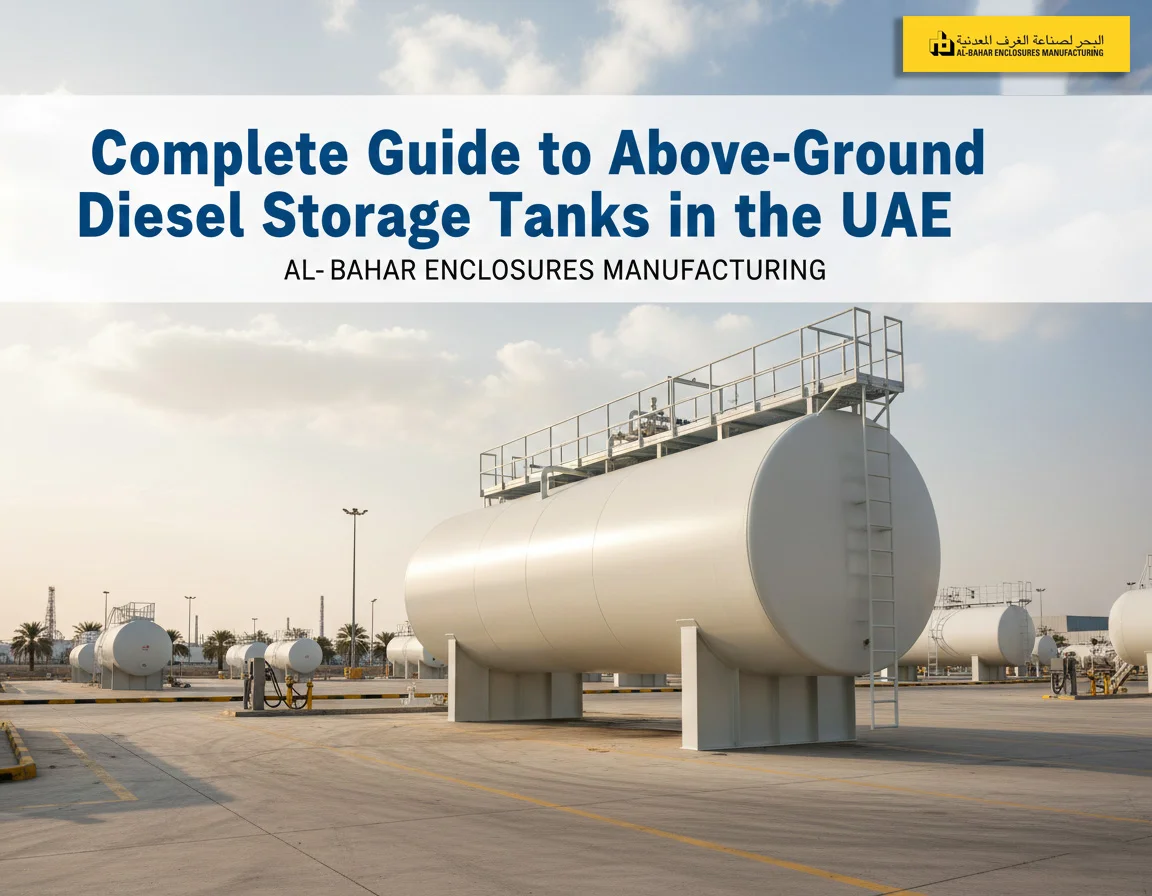
If your business relies on generators, heavy equipment, or a steady fuel supply, an above-ground diesel fuel storage tank is not just a metal container – it’s critical infrastructure. In the UAE, where high temperatures, dust and strict safety expectations come together, choosing and designing the right tank becomes even more important.
In this guide, we’ll break down everything you need to know about above-ground diesel tanks in the UAE: what they are, how they’re designed, typical capacities, safety and compliance factors, and how to choose a reliable manufacturer.
What Is an Above-Ground Diesel Fuel Storage Tank?
An above-ground diesel fuel storage tank (AST) is a steel tank installed on the surface, not buried. It’s used to store diesel and sometimes other fuels for:
- Generator backup systems
- Construction and rental equipment
- Industrial and logistics operations
- Fuel depots and yards
Compared to underground tanks, above-ground diesel systems:
- Are easier to inspect and maintain
- Require less civil work
- Are simpler to relocate if your operations move
For many UAE projects, especially where open yard space exists, an above-ground diesel AST is the most practical and cost-effective choice.
Why Above-Ground Diesel Tanks Are Popular in the UAE
The UAE environment pushes tanks hard: high ambient temperature, intense UV, dust, and sometimes coastal humidity. Above-ground diesel tanks are popular because they help you:
- Install faster– minimal excavation and civil work
- Monitor visually– leaks, corrosion, or damage can be seen quickly
- Plan expansion– easy to add another tank or move existing tanks
- Control costs– lower upfront civil cost vs underground solutions
For generator-backed facilities (towers, data centres, factories, hospitals), construction sites, and logistics yards, an above-ground system usually offers the best balance between safety, cost, and flexibility.
Key Components of an Above-Ground Diesel Tank System
A modern above-ground diesel storage setup is more than just the tank shell. Typical system elements include:
- Primary steel tank– the main diesel containment vessel
- Secondary containment (bund or double-wall)– captures leaks if the inner tank fails
- Nozzles & fittings– for filling, suction, returns, vents, and drains
- Vent and emergency vent– to handle thermal expansion and protect against overpressure
- Level monitoring– mechanical gauges or electronic level sensors/ATG
- Dispensing system– pump, meter, hose, nozzle, sometimes integrated as a skid
- Access system– ladders, platforms, and handrails for safe inspection
Good design starts with the load profile (how much fuel you consume and how often you refill) and then aligns capacity, dimension,s and accessories around your real-world use.
Single-Wall vs Double-Wall Above-Ground Diesel Tanks
One of the first design decisions is whether you need a single-wall or double-wall (bunded) above-ground diesel tank.
Single-Wall Tanks
A single-wall tank has just one steel shell. It’s typically used where:
- There is already an external concrete bundor containment pit
- The site is low-risk or remote
- Regulations allow external containment structures
Pros:
- Lower initial cost
- Lighter and easier to move
- Flexible to integrate into existing bunds or yards
Cons:
- Relies heavily on the quality and maintenance of the external bund
More site coordination (civil + mechanical)
Double-Wall / Bunded Tanks (Self-Bunded)
A double-wall tank (also called self-bunded) has an inner tank and an outer tank, with space in between for secondary containment.
Best for:
- Industrial and commercial sites in cities
- Fuel depots and logistics yards
- Projects requiring consultant or authority approvals
- Sensitive environments where leaks must be fully contained
Pros:
- No need for separate external bund walls
- Integrated secondary containment
- Easier to move as a complete “package.”
- Often aligned with modern safety expectations
For high-value projects and long-term installations, a double-wall above-ground diesel tank is often worth the extra capital expenditure because it simplifies compliance and reduces environmental risk.
Standard Capacities and Typical Use Cases
In the UAE, above-ground diesel tanks are commonly sized to match generator autonomy (how many hours/days you want to run without re-fuelling) and the site’s refilling logistics.
Below are typical standard capacities and where they often fit:
| Liters (L) | Approx. Gallons | Typical Application |
|---|---|---|
| 500 L | 132 gal | Small generators, light equipment |
| 1,000 L | 264 gal | Temporary sites, small offices |
| 2,000 L | 528 gal | Light industrial use, workshops |
| 5,000 L | 1,320 gal | Mid-size generators, small buildings |
| 10,000 L | 2,640 gal | Commercial buildings, logistics yards |
| 15,000 L | 3,963 gal | Multi-generator systems, industrial plants |
| 20,000 L | 5,283 gal | Large depots, major facilities |
| 30,000 L | 7,925 gal | Heavy industrial use, multi-day autonomy |
| 40,000–50,000 L | 10,566–13,208 gal | Fuel farms, centralized storage |
Quick Liters ↔ Gallons Reference Table
Many BOQs and international documents still specify volumes in gallons, while UAE designs often use liters. Here’s a quick reference for your above-ground diesel designs:
Testing and Quality Assurance for Above-Ground Diesel Tanks
Liters to Gallons
| Liters (L) | Approx. Gallons (gal) |
|---|---|
| 100 L | ~26.4 gal |
| 250 L | ~66 gal |
| 500 L | ~132 gal |
| 1,000 L | ~264 gal |
| 2,000 L | ~528 gal |
| 5,000 L | ~1,320 gal |
| 10,000 L | ~2,640 gal |
| 20,000 L | ~5,283 gal |
Gallons to Liters
| Gallons (gal) | Approx. Liters (L) |
|---|---|
| 100 gal | ~378 L |
| 250 gal | ~946 L |
| 500 gal | ~1,893 L |
| 1,000 gal | ~3,785 L |
| 2,500 gal | ~9,463 L |
| 5,000 gal | ~18,927 L |
Above-Ground vs Underground Diesel Tanks – Which Is Better?
Both above-ground and underground tanks can be made safe and compliant. The right choice depends on space, aesthetics, risk, and budget.
Above-Ground Diesel Tanks – Pros
- Lower civil cost and faster installation
- Easy access for inspection and maintenance
- Easier modification or relocation
- Ideal where yard space is available
Above-Ground Diesel Tanks – Cons
- Visible – may require aesthetic treatment or screening
- More exposed to impact (e.g., vehicles) without proper barriers
Underground Diesel Tanks – Pros
- Hidden underground – better aesthetics & space-saving
- Less exposed to surface-level impact or fire
Underground Diesel Tanks – Cons
- Higher civil and installation cost
- Leak detection and remediation are more complex
Harder to inspect visually
For many UAE generator and industrial applications, above-ground diesel storage wins on practicality and lifetime cost, which is why you see so many ASTs in industrial zones and logistics yards.
Safety, Compliance and Approvals in the UAE
Even if your particular project doesn’t name every standard, a good tank manufacturer will design around well-known codes and local expectations such as:
- Best practices based on APIand UL-type design concepts
- Local authority expectations (e.g. Civil Defence, municipalities, utilities, oil companies)
- Requirements for:
- Overfill protection
- Proper venting
- Emergency vents
- Secondary containment (bund or double-wall)
- Safe access for inspection and maintenance
When evaluating suppliers, look for:
- Clear mention of complianceand safety philosophy (not just “we make tanks”) – similar to how Cochin Steel emphasises compliance with ADNOC, DEWA, ENOC, etc., on their diesel storage pages.cochinsteeluae.com
Experience with diesel storage specifically, not just generic steel fabrication.
Testing and Quality Assurance for Above-Ground Diesel Tanks
A credible manufacturer should offer documented testing and QA as part of the above-ground diesel tank build:
- Material verification– correct steel grade and thickness
- Weld inspection– visual testing, sometimes additional NDT as per spec
- Hydrostatic testing– filling the tank with water, holding under pressure, checking for leaks
- Pneumatic testing– air testing of certain sections if required
- Coating quality checks– dry film thickness (DFT) readings for anti-corrosion coating
- Final inspection checklist– nozzles, manways, vents, nameplates, safety labels
If you’re buying an above-ground diesel tank for a critical facility, ask for test reports and inspection records – they’re as important as the steel itself.
Common Mistakes to Avoid with Above-Ground Diesel Storage
Some of the most expensive issues come from simple planning mistakes:
- Undersizing the tank– forcing frequent refills and operational risk
- Ignoring access– no proper ladder or platform for safe inspection
- Poor venting– causing breathing issues and potential structural stress
- No clear spill management– no plan for minor overfills or hose failures
- Weak foundations– tank saddles or plinths not properly designed
A good design review with your supplier at the start prevents these “cheap now, expensive later” problems.
How to Choose the Right Above-Ground Diesel Tank Supplier
When comparing vendors in the UAE:
- Check depth of content, not just name
- Some suppliers have very short pages with little technical detail (100–150 words), while others provide in-depth, engineered information (~800+ words). com+2meosuae.com+2
- Detailed content often reflects deeper real-world experience.
- Look for project experience & photos
- Real projects in industrial zones, logistics yards, plants, etc.
- Ask about design support
- Help with capacity sizing, nozzle layout, and compliance notes.
- Check after-sales support
- Installation guidance, maintenance support, and spare parts.
- Confirm documentation
Drawings, datasheets, test certificates, and any authority documentation you may need.
FAQ – Above-Ground Diesel Storage in the UAE
Start from your fuel consumption: generator kW, load profile, and hours per day. Multiply consumption by desired autonomy (e.g. 24–72 hours) and add a safety margin for unexpected load or refill delays. That gives you a minimum usable volume; then you choose the nearest standard size.
Not always, but it is strongly recommended for:
- Urban or industrial sites
- Large capacities
- Projects with consultants or strict environmental conditions
Double-wall tanks provide integrated secondary containment and often align better with modern safety expectations.
At a minimum:
- Visual checks– daily/weekly for leaks, damage, unusual signs
- Formal inspection– as per your operator’s procedures and any applicable standards (often annually or as recommended by the manufacturer)
Coating and corrosion checks – periodically, especially in harsh/coastal environments
Yes, one of the biggest advantages of above-ground diesel tanks is that they can be disconnected, emptied, cleaned and moved – provided they were originally designed with lifting lugs and proper structural strength, and you follow safe rigging and transport practices.
Good practice is to request:
- GA drawings
- Datasheets
- Hydrotest / leak test reports
- Coating system info + DFT readings (if available)
Nameplate details and basic O&M guidance